Evo 8 Fuel Pressure Regulator Upgrade: Worth It?
The first time an Evo 8 starts “acting weird” on fuel, it usually doesn’t feel like a fuel system problem. You’ll see a tune that used to be clean start chasing AFR, a car that stumbles at tip-in, or fuel trims that won’t settle down after you add a pump. The common thread is control. You can move a lot of fuel through an Evo, but if you can’t keep pressure stable and predictable, your injector data and your tune are fighting a moving target.
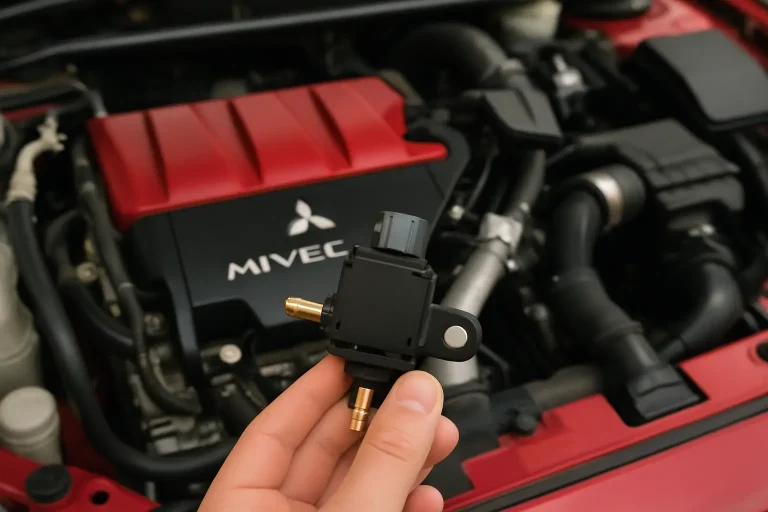
That’s the real reason the evo 8 fuel pressure regulator upgrade is such a common next step once the basic bolt-ons are done. It’s not about making power by itself. It’s about making the fuel system behave like an engineered system again—especially when you’re stacking mods that change flow, voltage, and injector size.
When the stock Evo 8 regulator stops being “fine”
For a near-stock 4G63 with a healthy pump and factory injectors, the OEM regulator generally does its job. The problem is that most Evo builds don’t stay “near-stock” for long. The moment you change fuel delivery capacity, you can expose limitations that weren’t obvious on the factory setup.
A bigger in-tank pump is the classic trigger. High-flow pumps can overwhelm the stock regulator’s ability to bypass fuel at idle and cruise. That can drive pressure up where it shouldn’t be, which effectively makes your injectors flow more than their rated value at a given pulsewidth. The ECU isn’t psychic—it’s still commanding fuel based on injector scaling and latency, and now the mechanical side changed underneath it.
The second trigger is injector upgrades. Larger injectors make it easier to hit your power goal, but they also make consistency more important at low pulsewidth. If your base pressure isn’t stable, idle and light throttle will show it first. You’ll end up masking a mechanical problem with tuning tricks, and that’s how “drives okay” becomes “randomly goes lean on decel” or “hot starts are annoying.”
The third trigger is ethanol or aggressive blends. E85 doesn’t automatically require an aftermarket regulator, but it tends to push people into higher flow pumps, larger injectors, and more time spent at the edge of the fuel system’s control range. Add heat soak, track sessions, or long pulls and you quickly appreciate why fuel pressure control is a reliability mod, not just a power mod.
What an Evo 8 fuel pressure regulator upgrade actually fixes
An aftermarket adjustable fuel pressure regulator (AFPR) earns its keep in three specific ways: bypass capacity, pressure stability, and adjustability.
Bypass capacity is the unglamorous one, but it’s the biggest deal on a street Evo. If the pump is supplying more fuel than the engine needs at idle, the regulator must return that excess fuel to the tank without letting rail pressure creep upward. A good AFPR can move enough return volume that your idle and cruise pressure stays where you set it.
Pressure stability matters because injectors don’t just care about “pressure,” they care about differential pressure across the injector. On a properly referenced regulator, rail pressure rises 1:1 with boost so the injectors see a consistent pressure difference. When the reference and the regulator response are crisp, your injector characterization stays valid and your tune gets easier—not because the ECU is doing less, but because the mechanical baseline is predictable.
Adjustability is the one everyone talks about, and it does matter. Being able to set base pressure to match the injector data you’re tuning with is the difference between clean math and constant compensation. If your injector data assumes a specific base pressure and your rail is actually something else, you’re rewriting the rules of your fuel model without meaning to.
Picking the right regulator setup (and the trade-offs)
There are two smart ways to approach an FPR upgrade on an Evo 8: keep it simple and proven, or build it for headroom.
If your goal is a responsive street car with a moderate turbo, a quality AFPR with a proper Evo-fitment adapter, a fuel pressure gauge (temporary or permanent), and clean lines is usually the sweet spot. You get control back without turning the engine bay into a science project.
If you’re planning a bigger build—higher base flow, ethanol, sustained track use—headroom becomes the priority. That typically means thinking about line size, return capacity, and fuel rail layout. Here’s the trade-off: the more you “overbuild,” the more opportunities you introduce for leaks, noise, and packaging headaches. Bigger lines and more fittings aren’t automatically better if the install quality isn’t there.
One more nuance: not every “rising rate” regulator is what you want. For an Evo on modern tuning strategies, you want a true 1:1 manifold-referenced regulator. Anything that changes pressure ratio in boost is a workaround from a different era, not a foundation for a clean tune.
Installation realities that decide whether it works
An FPR upgrade isn’t difficult, but it is unforgiving. Most “my fuel pressure is unstable” stories come down to one of three issues: vacuum reference problems, return-side restriction, or gauge/measurement mistakes.
Vacuum reference is non-negotiable. The regulator needs a direct manifold reference so it sees both vacuum and boost. Tee’ing into a random line that has a restrictor, a check valve, or a solenoid in the path can slow the signal and make pressure response laggy. That lag shows up as transient fueling weirdness—exactly what you were trying to fix.
Return restriction is the silent killer. You can install the best regulator on the planet, but if the return path can’t flow, pressure will still creep. Kinked hoses, undersized return lines on high-flow setups, or a poorly placed fitting can all create a bottleneck. If you upgraded the pump and suddenly your base pressure won’t come down, don’t assume the regulator is defective—assume the return can’t keep up until proven otherwise.
Measurement mistakes are more common than people admit. Fuel pressure gauges vary in accuracy, and cheap liquid-filled gauges can read strangely when they heat soak. If you’re setting base pressure, do it with a gauge you trust and verify it under the conditions that matter.
Setting base pressure the right way (so the tune makes sense)
Base pressure is not “whatever the internet says.” It’s whatever matches the injector data you’re using and the calibration strategy in your ECU.
The correct process is simple: disconnect the vacuum reference line from the regulator, then plug the reference line so you don’t create a vacuum leak. With the engine idling, adjust the regulator to your target base pressure. Reconnect the reference line and confirm that pressure drops at idle because manifold vacuum is now pulling against the diaphragm. That drop is a good sign—it means your regulator is actually referencing manifold pressure.
From there, confirm the 1:1 behavior. Under boost, rail pressure should rise one psi for every one psi of boost. If it doesn’t, you either have a reference issue, a regulator issue, or a routing problem.
And yes, you’ll likely need a tune touch-up after changing base pressure or regulator behavior. Even if you set the same nominal base pressure as stock, a stable regulator can change how the system behaves at transient conditions. That’s a good thing, but it still means you validate trims, AFR, and tip-in like a responsible Evo owner.
“Do I need it?” depends on your mod stack
If you’re on a stock turbo, stock injectors, and stock pump, an AFPR is usually not the first place to spend money. Mitsubishi engineered that combo to work together.
If you’re running a high-flow pump on stock injectors, the odds go up that you’ll fight idle pressure creep. If you’re on larger injectors, it becomes more about keeping injector behavior consistent and tuning predictable. If you’re on ethanol and you care about repeatability on hot days, it’s hard to argue against better pressure control.
The other “it depends” factor is your end goal. If you’re building an Evo that lives at the drag strip or sees repeated high-load pulls, fuel pressure stability is part of your safety margin. If your Evo is a weekend canyon car with mild mods, your money may be better spent on maintenance, sensors, or addressing known weak points first.
What a good upgrade feels like on the road
When the regulator upgrade is done right, the car doesn’t suddenly feel faster. It feels more consistent. Hot starts clean up. Idle stops hunting. Tip-in becomes less touchy. Your tuner stops having to band-aid odd fuel behavior with compensations that don’t belong in a clean calibration.
That’s the win: a fuel system that acts like it’s supposed to, so every other change you make—injectors, turbo, fuel type—has a stable baseline. If you’re building your Evo 8 with the same mindset you’d bring to a track day, predictable is fast.
If you want Evo-specific parts that are chosen with that reliability-first approach, Evo Motor Parts is built around the same idea: tested fitment, proven suppliers, and upgrades that support real-world Evo builds.
The best time to upgrade your fuel pressure regulator is right before you’re forced to—when you’re still in control of the build, not reacting to a log that suddenly doesn’t make sense.