Evo 9 Turbo Upgrades That Stay Reliable
You can make an Evo 9 feel violently fast with a bigger turbo—and still have a car that starts every morning, idles clean in traffic, and survives track heat. The difference isn’t luck. It’s whether your turbo upgrade is treated like a system, or like a single shiny part you bolt on and “figure out later.”
Most “my turbo upgrade blew up my Evo” stories aren’t actually about the turbo. They’re about heat, fuel supply, airflow control, oiling, tuning, and pushing a 20-year-old 4G63 beyond what the supporting parts can handle. If you care about evo 9 turbo upgrade reliability, this is the playbook: pick a sensible power target, choose a turbo that lives there efficiently, and build the support and tune around it.
What “reliability” really means on an Evo 9 turbo upgrade
For a daily-driven Evo, reliability means stable oil pressure, controlled coolant temps, predictable fueling, and knock-free combustion on the worst day—not the best pull on a cool night. For a track-driven Evo, it means the setup is happy at high load for minutes at a time, not just a 3rd-gear rip.
That’s why the same turbo can be “reliable” for one owner and a nightmare for another. A 20G at 22–24 psi with a conservative tune, solid intercooling, and adequate fuel system can live a long time. The same 20G at the edge of compressor efficiency, overspinning, with an overheating intake charge and marginal injector duty cycle will make you chase issues until something gives.
Reliability isn’t just “won’t break.” It’s also the car staying consistent: no random boost creep, no intermittent misfire under load, no heat-soak that turns your tune into a moving target.
The hidden reliability killers (and why they show up after a turbo swap)
Heat management isn’t optional
A larger turbo often means you’re making more mass airflow and more heat—both in the intake charge and underhood. That heat doesn’t just reduce power; it destabilizes the tune. Hotter intake air increases knock tendency. Underhood heat bakes vacuum lines, boost control hoses, and wiring. Exhaust manifold and turbine housing temps rise, and suddenly things that were “fine” on the stock turbo start cracking, leaking, or melting.
If you upgrade the turbo but keep a tired intercooler setup, weak radiator performance, or a marginal cooling system, you’re building a car that feels strong for a pull and then slowly turns into a timing-and-boost-limited headache.
Fuel delivery margins get thin fast
Turbo upgrades typically push you into higher airflow where the stock fuel system runs out of comfortable headroom. When injector duty cycle is pinned and fuel pressure control isn’t stable, you’re not “making power.” You’re rolling dice.
A reliable turbo setup is built on predictable fuel delivery: injectors sized with margin, pump capacity that doesn’t fall on its face at higher boost, and a tune that doesn’t rely on heroic compensation tables to hide shortcomings.
Boost control problems masquerade as “turbo problems”
Boost creep, oscillation, and overboost are common after a turbo change—especially with freer-flowing exhaust and a mismatch between wastegate flow and turbine housing. That’s not just annoying. It’s a reliability issue because a single spike can push the engine into knock, lean conditions, or excessive cylinder pressure.
Solid boost control is boring, and that’s the point. A stable boost curve is one of the most underrated “reliability mods” you can buy.
Oil supply and return are make-or-break
The 4G63 is tough, but it’s not immune to oiling mistakes. Turbo swaps invite oil feed restrictor confusion, return line routing issues, and old, coked-up lines being reused because “they looked okay.” A turbo that smokes after the install is often telling you about drain angle, crankcase pressure, or incorrect oil feed—not a defective turbo.
Crankcase pressure is the quiet villain here. When blow-by increases (common on higher-boost setups), oil drains slower from the turbo, seals get unhappy, and you start chasing smoke, consumption, and fouled plugs.
Choosing a turbo for reliability, not just peak numbers
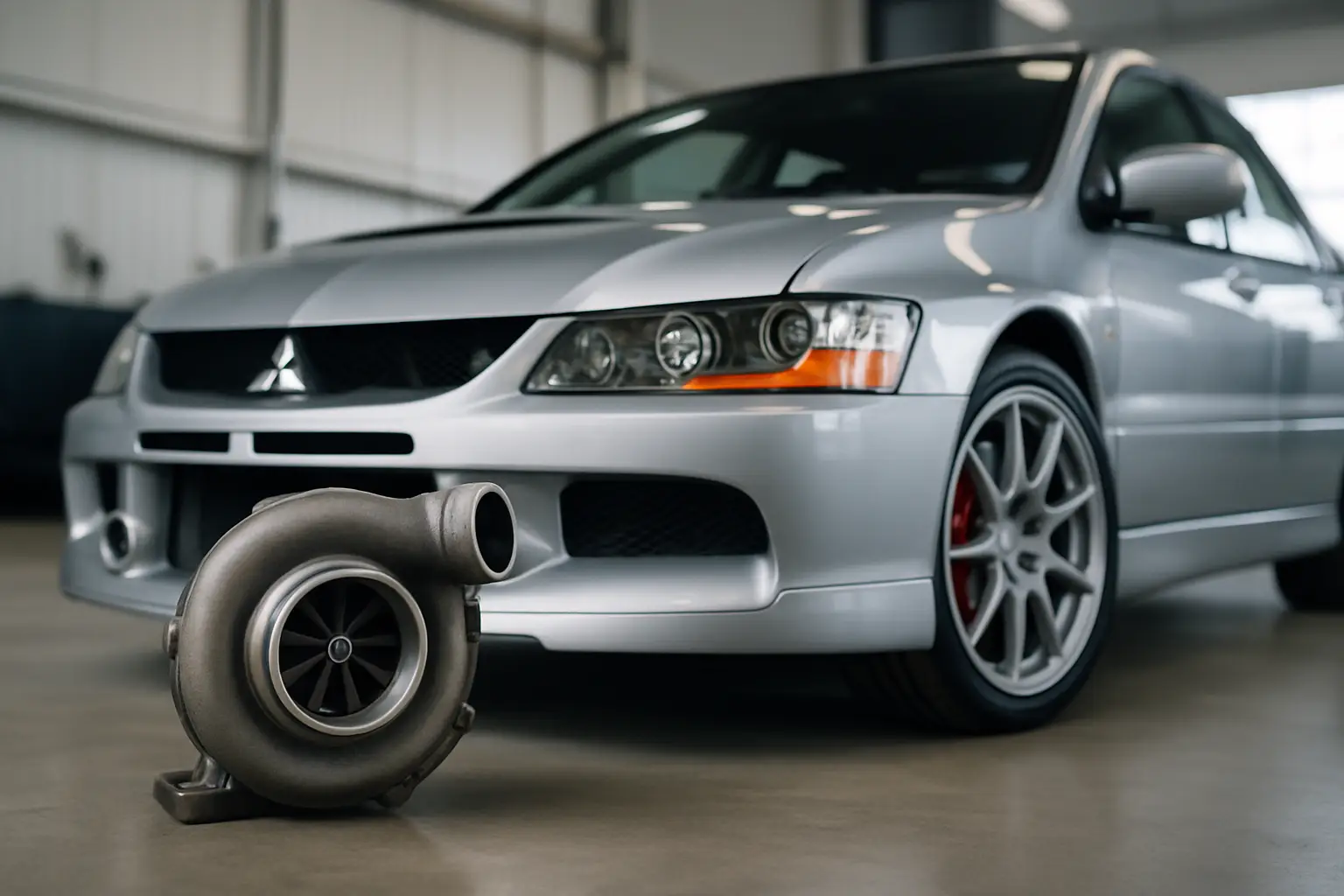
The most reliable turbo upgrade is usually the one that makes your target power without being spun to the moon. When a turbo operates in its efficiency range, you get cooler charge temps, less backpressure, and a tune that doesn’t need to live on the edge.
A few practical guardrails that tend to keep Evo 9 builds dependable:
If you want a quick-spooling street Evo that still hits hard, a moderate frame turbo set up for efficient midrange boost is often the sweet spot. Chasing a high dyno number with a turbo that’s too small typically creates excess heat and backpressure. Going too large can make the car feel lazy unless you build the supporting setup and driving style around it.
Also consider turbine housing and wastegate strategy. A setup that can control boost cleanly at part-throttle and during gear changes will drive better and break less. “More boost” isn’t the flex people think it is when it comes with unstable control.
The supporting mods that actually drive reliability
You don’t need a spreadsheet to build a dependable Evo 9 turbo setup, but you do need the basics handled.
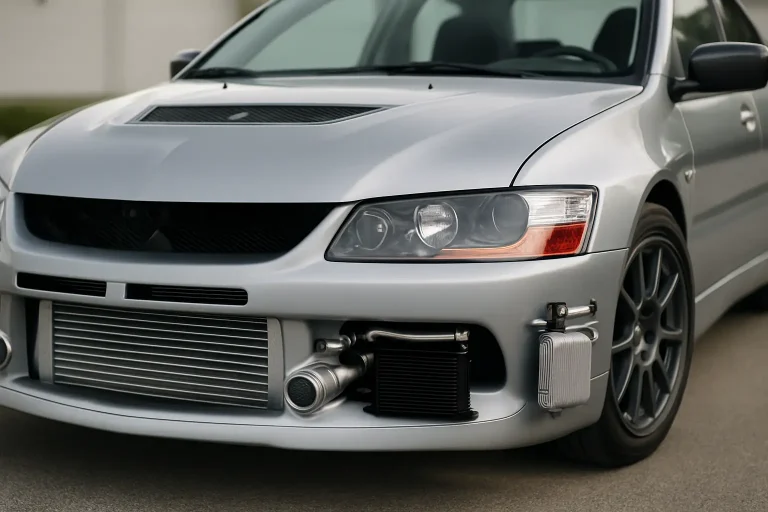
A healthy intercooler and airtight piping matter because leaks turn tuning into guesswork. A leak after the MAF (or in a speed-density setup, a leak that changes airflow vs pressure relationships) can cause unstable AFR, weird trims, and inconsistent boost response.
A strong cooling system matters because sustained power turns into sustained heat. If your radiator, fans, thermostat, and coolant flow aren’t on point, you’ll end up pulling timing—then adding boost to “get it back”—and that loop ends poorly.
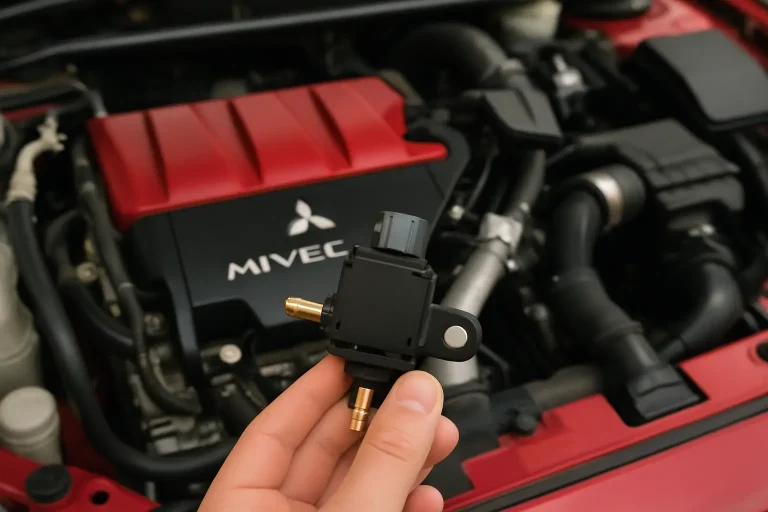
A real boost control solution matters because repeatability is reliability. Whether you run a quality boost control solenoid or a dialed-in mechanical controller, the goal is the same: no spikes, no creep, no surging.
A crankcase ventilation strategy matters because higher load creates more blow-by. If you’re still on tired lines and a marginal PCV setup, you’re increasing the chance of oiling issues, smoke, and inconsistent octane from oil vapor.
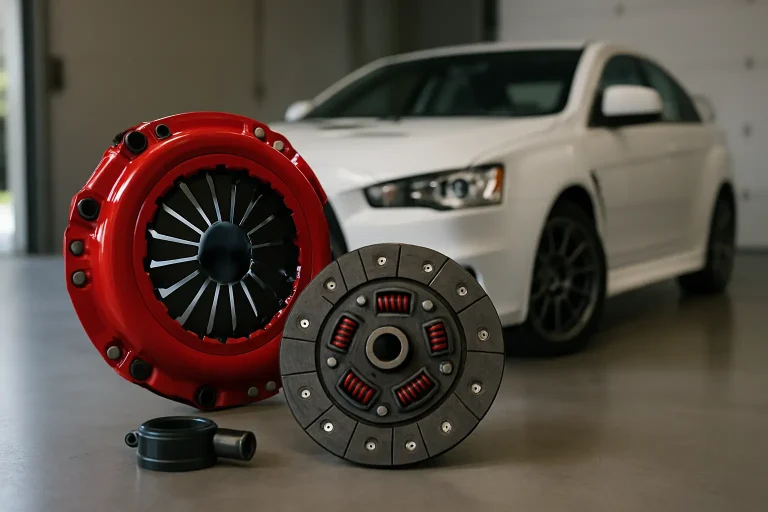
And yes, engine health matters. A turbo upgrade won’t fix low compression, a weak fuel system, old coils, cracked plugs, or a slipping clutch. It just makes the consequences louder.
Tuning is where reliability is won (or thrown away)
If you want reliability, you don’t tune for the best pull—you tune for the worst conditions you’ll actually see.
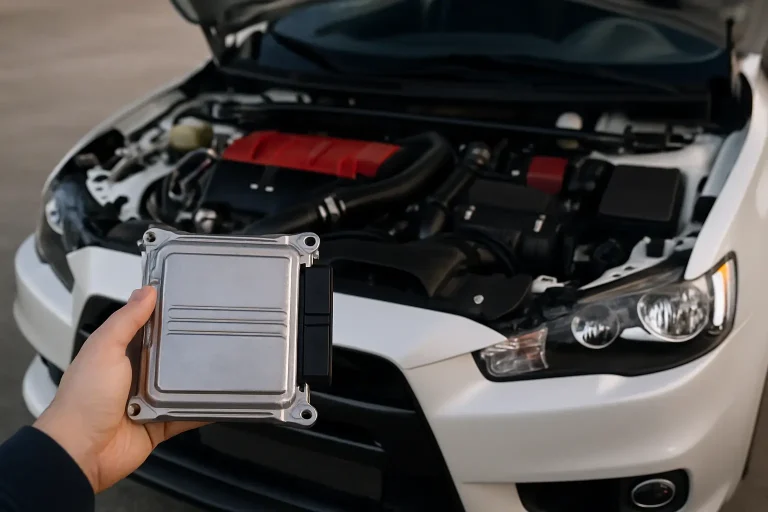
That means conservative ignition timing where knock risk climbs, safe AFR targets under sustained load, and boost targets that make sense for your fuel quality and intercooler effectiveness. It also means setting up your failsafes and monitoring so problems show up as data, not as damage.
A reliable tune is usually less dramatic than an aggressive one. The car may give up a little peak power, but it will repeat that power on hot days, on long highway pulls, and after back-to-back laps. For most owners, that’s the whole point.
If you’re on pump gas, be honest about it. Pump quality varies, and the Evo’s knock sensitivity under heat is real. If you want to push harder, pick a fuel strategy that supports it rather than trying to tune bravely around limitations.
Daily driver vs track: the reliability target changes
On a daily, short bursts are common and recovery time is built in. Intake temps come down between pulls. You’re rarely at wide-open throttle for long. The setup can be more forgiving.
On track, you’re leaning on the turbo continuously. Oil temps climb, coolant temps climb, intake temps climb, and anything marginal becomes obvious fast. That’s where you see the value of a well-sized turbo, strong intercooling, proper ducting, stable boost control, and a tune that doesn’t treat knock feedback like a suggestion.
If your Evo sees both street and track, build it for track reliability and enjoy the street benefits. A track-safe setup typically drives cleaner and more consistently everywhere else.
A realistic “reliable power” mindset for the Evo 9
Here’s the reality: the Evo 9 can take a lot, but every step up in airflow and boost raises stress on the engine, drivetrain, and cooling system. Reliability isn’t about being afraid of power—it’s about choosing the kind of power the car can sustain.
If you’re building on a healthy stock long block, the most dependable results usually come from staying within a power range that doesn’t require extreme boost, extreme timing, or extreme heat. As soon as your setup requires everything to be perfect all the time, it won’t be.
A turbo upgrade that feels “easy” for the car is almost always the one that lasts. Smooth torque delivery, manageable backpressure, stable AFR, and controlled temps will do more for longevity than any single brand badge on a compressor housing.
Where fitment and part quality quietly affect reliability
Reliability isn’t only about the big components. It’s also about the stuff that makes the big components behave.
Cheap couplers that balloon, clamps that slip, gaskets that leak after a week, and questionable sensors are how you end up with phantom misfires and chasing boost issues at midnight. The Evo platform is sensitive to small problems because the tune is sensitive to airflow, pressure, and temperature accuracy.
That’s why we’re obsessive about Evo-specific fitment and proven components. If you want to source parts from a shop that lives in this chassis every day, Evo Motor Parts exists for exactly that reason: tested, trusted, and selected by real Evo owners who care about race-ready reliability as much as power.
The checks that keep your upgraded turbo setup alive
After the install and tune, reliability becomes maintenance and monitoring. Watch oil level and condition, not just change intervals. Keep an eye on plugs, coil health, and any sign of knock activity. Pressure test the intake system periodically. If boost behavior changes, treat it as a real problem immediately, not a “later” project.
Most importantly, don’t ignore small symptoms. A tiny exhaust leak pre-turbo can throw off spool and boost control. A minor vacuum leak can change idle and trims. A slightly weak pump can look fine until a hot day, then it isn’t. Reliability is earned by responding early, before the car responds expensively.
The best Evo 9 turbo upgrade is the one that still feels sharp after months of abuse—because you built the whole package, not just the headline part. Set a power target you can support, keep temps under control, demand a clean tune, and your Evo will keep doing what it was built to do: run hard, repeatedly, without excuses.