

Evo Motor Parts That Actually Make Sense
You can usually tell when an Evo is built with guesswork. It idles weird, heat-soaks after one pull, and the “mods” fight each other instead of working as a system. The fix is not buying more parts – it is buying the right evo motor parts for your exact chassis and your actual goal, then stacking them in an order that protects reliability while you chase power.
This is the Evo advantage and the Evo trap. The 4G63 (VII-IX) and 4B11T (X) respond hard to smart changes, but both punish sloppy fitment, borderline fueling, and heat management that is “good enough.” If you want a daily that feels OEM-clean but hits harder, or a track car that repeats laps without pulling timing, the parts list needs to be intentional.
Start with your build goal, not the cart
An Evo build goes sideways when the plan is “more boost” and nothing else. Power is a system. Air in, fuel in, spark control, heat out, and drivetrain integrity all have to scale together.
For a stock turbo daily, the smartest first purchases are the ones that restore baseline health – sensors, ignition components, cooling system parts, and vacuum lines that have aged out. For a bolt-on weekend car, you prioritize airflow and control: intake, intercooler efficiency, boost control stability, and tuning support. For a bigger turbo or E85 setup, you stop thinking in single parts and start thinking in margins: fuel pump headroom, injector sizing, MAP sensor range, clutch capacity, and oil temperature.
The trade-off is budget and timeline. If you buy only “fun” parts first, you end up paying twice when you have to redo supporting mods later. If you overbuild too early, you can make the car slower or less enjoyable while you chase problems you did not have.
Evo 7-9 vs Evo X: what changes when you shop
Platform-specific fitment is not a buzzword – it is the difference between a clean install and a weekend of grinding, rerouting, and chasing leaks.
Evo VII-IX owners are usually managing age as much as performance. Rubber, hoses, brittle connectors, worn mounts, and tired cooling components show up fast once you turn up boost. The 4G63 is forgiving in some ways, but it hates detonation and it hates heat. Good maintenance parts plus proven airflow upgrades are the fastest path to a “new” feeling car.
Evo X owners deal with different realities: tighter packaging in some areas, different fueling strategies, and a powerband that responds to turbo and tune changes in its own way. The 4B11T can make strong power, but you do not get to ignore charge temps, oil control, and drivetrain stress. Also, some owners are managing SST vs GSR decisions, which changes the priorities for drivetrain and tuning.
So when people say “that part fits Evo,” the right response is “which Evo?” Evo motor parts should be chosen by generation first, then by build target.
Cooling and heat control: the quiet horsepower
The quickest way to make an Evo feel inconsistent is to let it heat-soak. Your ECU will pull timing. Your intake air temps climb. Knock counts show up when you least want them. You can have the right turbo and the right tune and still lose power if the car is cooking itself.
Cooling is not glamorous, but it is the difference between one clean pull and repeatable performance. Radiator condition, thermostat behavior, fan health, and hoses matter, especially on older cars. Intercooling matters just as much, because the air you compress has to be cooled efficiently or your “boost” becomes hot air and timing gets yanked.
It depends on usage. A daily driver in a mild climate can survive on refreshed OEM-style components and a solid intercooler setup. A track-day car needs more margin, because sustained load is what reveals weak cooling. If you are seeing fluctuating temps, inconsistent power, or repeated knock activity as the session goes on, that is your car asking for heat management, not more boost.
Intake, intercooling, and boost control: where the combo matters
Airflow parts are where Evo owners get tempted to mix-and-match. An intake that looks great on the page can create turbulence near the MAF, or shift fueling behavior if the calibration is not matched. An intercooler that is “big” can increase pressure drop if the core design is wrong for your setup. A blow-off valve can create drivability issues if it is not compatible with your metering strategy.
The goal is stable airflow and stable boost. That usually means:
- Intake and intake piping that fit correctly and do not create weird sensor behavior
- Intercooler and piping that keep temps down without making the turbo work harder than it needs to
- Boost control components that hold target boost cleanly, especially in cold weather or at high RPM
This is where proven combinations win. If your tune is fighting boost creep, oscillation, or weird transient fueling, the car will never feel “sorted.” The right evo motor parts are the ones that reduce variables for your tuner.
Fueling and ECU: the line you do not cross
Fueling and control are where “almost right” becomes expensive. If you are stepping into higher boost, bigger turbo, E85, or just want repeatable performance, you need parts that support stable fuel pressure and accurate measurement.
Pumps and injectors are not just about peak horsepower. They are about duty cycle, heat, voltage drops, and consistency. Running injectors at the edge, or a pump that cannot maintain pressure under load, turns your tune into a guessing game. The car might feel fine on the street and then go lean at the top of third when conditions change.
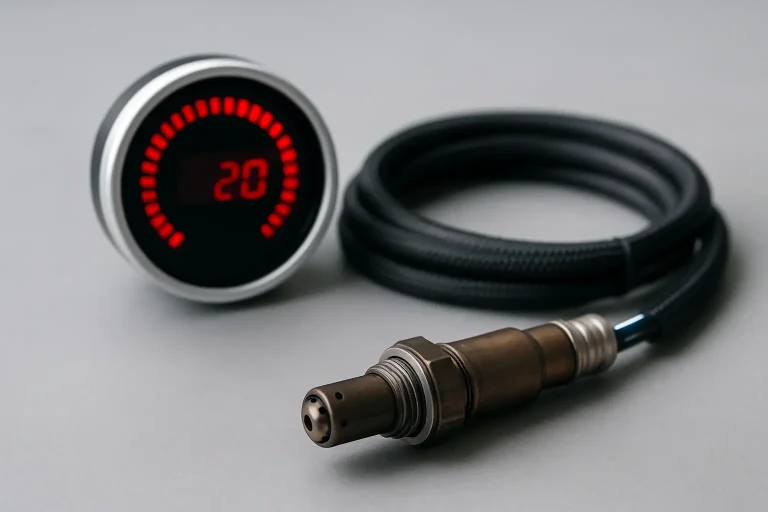
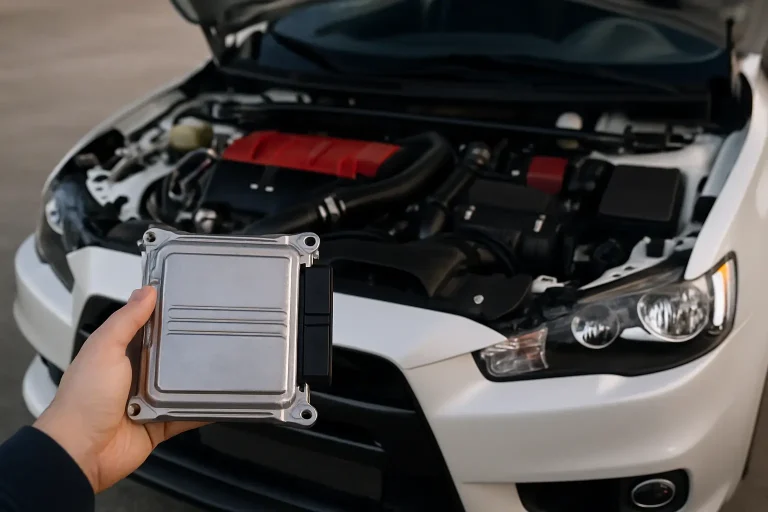
ECU solutions and monitoring tools are the grown-up move. Whether you are staying close to stock with conservative tuning or going full build with standalone-level control, the point is the same: you want the car to do what you command, not what the weather allows.
The trade-off is complexity. More control can mean more setup and more responsibility. If you do not need advanced features, do not buy headaches. But if you are pushing the platform, you need the data and the authority to keep it safe.
Drivetrain and mounts: power you can actually use
Power that does not reach the ground is bench racing. Once torque goes up, weak links show up fast – clutch slip, drivetrain lash, broken mounts, and wheel hop that shocks components.
Mounts are a classic “feel” mod that becomes a reliability mod once power rises. Stiffer mounts reduce movement that can stress couplers and piping, but they can also increase NVH. For a daily, you balance comfort and control. For a track car, you accept more vibration because precision matters.
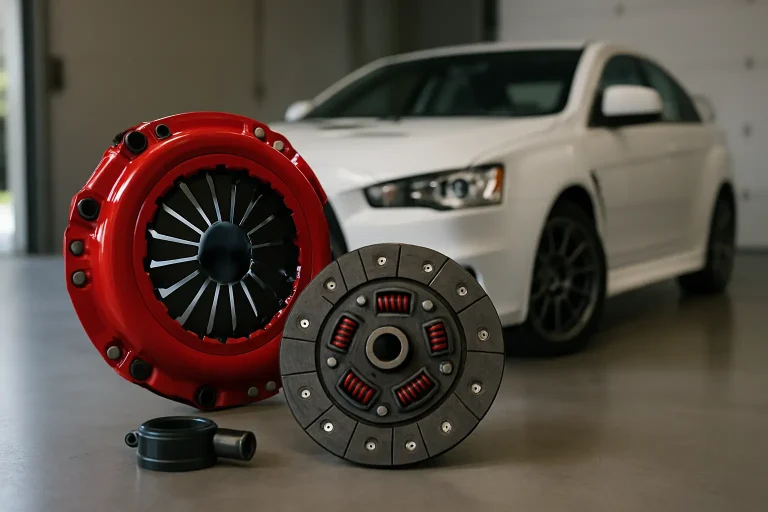
Clutch selection is the same story. A clutch that is too mild will slip, overheat, and die early. A clutch that is too aggressive can make the car miserable in traffic and stress the drivetrain. The right choice depends on torque, usage, and whether you care more about pedal feel or absolute holding power.
Suspension, brakes, and steering: the parts that make an Evo an Evo
An Evo with big power and weak brakes is not a build – it is a problem waiting for a downhill on-ramp. The chassis is why people fall in love with these cars. The goal is to keep that sharpness while making it more capable.
Suspension and steering upgrades are best done with intent. If you just throw parts at it, you can ruin ride quality, introduce bump steer, or make alignment impossible to hold. Arms, links, bushings, and geometry corrections should be chosen around your alignment targets and tire choice.
Brakes are not only about big rotors. Pads, fluid, lines, and cooling determine how long the pedal stays firm. Track drivers learn this fast. Street drivers feel it when the pedal gets spongy after a few hard stops. Again, it depends on usage: a canyon car wants bite and modulation; a track car wants heat capacity and consistency.
Restoration-grade OEM vs aftermarket: choosing with your ego off
Some parts should stay OEM-style. Some parts should be upgraded. The skill is knowing which is which.
OEM replacement makes sense when you are restoring baseline reliability: sensors, gaskets, cooling system components, and anything where the factory part already did the job well for 100,000 miles. Aftermarket makes sense when you are changing the demands: more airflow, more heat, more load, more grip.
There is also a middle ground: parts that are “OEM+” in function but built with better materials or tighter tolerances. Those are often the best buys because they fix known weaknesses without turning the car into a science project.
If you are trying to decide where to go OEM and where to go aftermarket, shop with a specialist that lives inside the Evo ecosystem, not a general catalog. That is the whole point of an Evo-only store like Evo Motor Parts – curated fitment, platform-specific selection, and parts that are recommended because they work on real VII-IX and X builds.
The smart order to buy evo motor parts
Most reliable builds follow the same rhythm. You fix the foundation first, then you add power, then you reinforce what that power stresses.
If your car is new to you, start with maintenance and known wear items, then address cooling, then do airflow and boost control, then tune and fueling. After that, handle mounts, clutch, and drivetrain as torque rises. Finally, invest in suspension and brakes to match your new speed.
If you already have mods installed, your best next step is not another part. It is an honest audit. Look at logs, temps, and fuel pressure behavior. Look at how the car repeats. Look at what breaks. The car will tell you what it needs if you stop trying to out-shop physics.
A clean Evo is not the loudest one in the lot. It is the one that starts every time, pulls the same on the third run as it did on the first, and comes back from a track day without a new mystery noise. Build for that, and the power feels better because you can trust it.


One Comment