Best Evo X Oil for Track Days: What Works
Your Evo X doesn’t kill oil on the street. It kills oil when you finally drive it like an Evo – long pulls, high RPM, repeated heat soak, and those “one more lap” sessions where oil temps creep past where the factory viscosity choice still behaves.
If you’re asking for the best evo x oil for track days, you’re really asking a more serious question: what oil will keep the 4B11T’s bearings, turbo, and timing system happy when the car is living in sustained load instead of short bursts. The answer depends on your oil temperature, bearing clearances, fuel dilution, and whether your car is mostly stock or living in the higher-boost world.
What track days do to the 4B11T
On track, the oil isn’t just a lubricant – it’s a cooling system and a hydraulic fluid. It has to maintain film strength in the rod and main bearings while also feeding the turbocharger at high shaft speeds. At the same time, oil is the working fluid for the MIVEC system and it’s constantly being sheared through tight clearances and a high-flow pump.
The biggest track-day enemies are heat and time. Heat thins oil, and time at temperature accelerates oxidation and shear. Add in repeated WOT events and you can also introduce fuel dilution, which thins oil even more and can pull your effective viscosity down a grade.
That’s why “whatever 5W-30 is on sale” is fine for commuting and a risk when you’re stringing together 20-minute sessions.
The real goal: viscosity at temperature, not the label
The number on the bottle is just the starting point. What matters on track is whether the oil still has enough viscosity at your real operating temperature to maintain pressure and film strength.
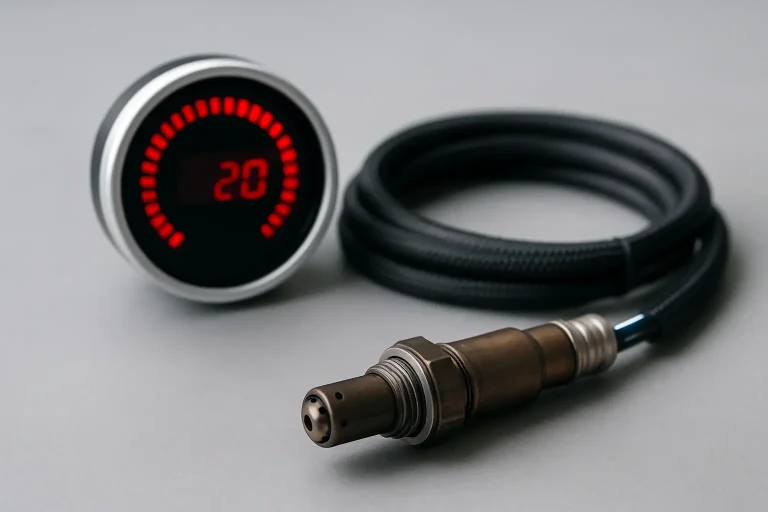
A healthy Evo X with a good cooling system often runs oil temps roughly in the 230-260F range on track, depending on ambient temps, pace, and oil cooler setup. Once you start living above that, the conversation changes fast.
If you’re consistently seeing oil temps in the 250-280F range, a thin oil that looks fine on the street can become marginal. That’s when drivers report pressure drop late in the session, noisier valvetrain, or a “soft” feel to the motor when it’s heat soaked.
Best Evo X oil for track days: the viscosities that make sense
There isn’t one magic brand that makes the Evo X bulletproof. The best choice is the viscosity and formulation that match your temperature window and build.
5W-40: the most common track-day sweet spot
For most track-day Evo X cars on pump gas with stock-ish clearances, a high-quality full synthetic 5W-40 is the safest all-around pick. You get better high-temp viscosity than a 30-weight without going so thick that cold flow becomes annoying or you start chasing pressure instead of protecting parts.
This is typically the move when:
You’re tracking in warm weather
You see oil temps climbing past about 240-250F
You’re running higher boost than stock or you’re simply hard on the car
You want a single oil that can do street plus track without drama
A true 5W-40 built for performance use tends to hold up better to shear and heat, and it gives the turbo and bearings a little more cushion when the session goes long.
10W-40: for consistently hot conditions or harder use
If your car runs hot on track or you’re in high ambient temps, 10W-40 can be a strong choice. The trade-off is that it’s thicker during warm-up, so it’s less ideal for frequent cold starts in winter climates. For a dedicated track season setup, that’s usually a non-issue.
This makes sense when your oil temps regularly push the upper end of the safe range and you want stability deep into a session. It can also be useful for engines that see higher oil consumption with thinner oils.
0W-40: solid compromise if you daily the car in colder climates
A quality 0W-40 gives you excellent cold-start flow with a 40-weight target at operating temps. For an Evo X that’s driven year-round, this can be a very practical “one oil” option.
The key is picking a proven, shear-stable synthetic. Some 0W-40 oils are formulated to meet long-drain street specs and can shear down in hard use. Others hold up extremely well. If you’re going this route, watch pressure behavior when the oil is hot and consider tightening your change interval.
5W-30: only if temps are controlled and the car is truly mild
Can a 5W-30 survive track days? Yes – when oil temps are controlled, you’re not dealing with big fuel dilution, and the car isn’t living at high boost. But it leaves less margin when conditions change.
If you insist on 5W-30, do it with data. Log oil temperature, watch hot idle pressure after a session, and shorten intervals. The moment temps climb or pressure drops late-session, that’s your sign to step up to a 40-weight.
What about brand – do you need a “racing” oil?
A true motorsports-oriented synthetic can be worth it, but not because it’s trendy. It’s worth it because track oils tend to resist shear, oxidation, and high-temp thinning better, and many have additive packages designed for sustained load.
Here’s the honest trade-off: some racing oils are not optimized for extended street use, long drain intervals, or emissions equipment longevity. If your Evo X is a street car that sees a few track days a year, you can run a performance street oil and just change it more often. If you track frequently, push oil temps, or run higher power, stepping into a more track-focused formulation is a smart reliability move.
How to choose based on your setup
The easiest way to get the right oil is to match viscosity to oil temperature and engine demand.
If your Evo X is close to stock power, on pump gas, with a healthy cooling system and oil temps staying under about 250F, a strong 5W-40 is typically the best blend of protection and practicality.
If you’re upgraded turbo, aggressive tune, or you know you’re going to see elevated oil temps, move toward 10W-40 or a particularly stout 5W-40 and plan on tighter intervals.
If you’re in a cold climate and daily drive the car, 0W-40 can give you the cold-start behavior you want without giving up the hot-side protection a track session demands.
And if your engine is built with nonstandard clearances, the builder’s recommendation matters more than internet consensus. Built motors can want different viscosity behavior to maintain pressure and film in the real clearance window.
Change intervals that actually protect the engine
Track days are oil-life cheat codes – they burn through additive package and viscosity faster than street miles.
For most Evo X track-day setups, a simple, conservative pattern works: fresh oil before the event if the oil has a few thousand street miles on it, then change it after the weekend or after 1-2 events depending on heat, fuel dilution, and how hard you ran.
If you’re running E85 or a rich tune, be extra strict. Fuel dilution is common and it can make “the right oil” behave like the wrong viscosity by the end of the day. If your dipstick level mysteriously rises or the oil smells strongly of fuel, shorten the interval immediately.
Filters matter more than people admit
On track, the oil filter sees high flow, high temperature, and repeated RPM spikes. A cheap filter with weak construction can go into bypass more often, or in worst cases, deform internally.
Run a quality filter from a reputable manufacturer and don’t stretch it across too many heat cycles. It’s a small part with a big job. If you’re chasing pressure stability and bearing life, filter quality is part of the equation.
Don’t ignore the oil temperature problem
If you’re constantly debating thicker oil, sometimes the real fix is controlling oil temps. Thicker oil can help maintain film strength, but it can’t reverse heat soak.
If your Evo X regularly runs high oil temps, consider the supporting hardware: a properly sized oil cooler with good airflow, ducting that actually forces air through the core, and cooling system health that keeps coolant temps stable so the whole engine bay isn’t a heat amplifier.
Once temps are under control, you can pick oil for protection instead of using viscosity as a band-aid.
A track-day baseline we trust
For the majority of Evo X owners doing HPDE on a healthy engine, full synthetic 5W-40 with a high-quality filter, changed frequently, is the baseline that keeps the car reliable without turning oil choice into a religion.
If you want to take the guesswork out of Evo-only maintenance and track prep, Evo Motor Parts focuses on the parts and build paths that hold up when you drive the car the way Mitsubishi intended.
The closing thought is simple: pick oil like you pick tires – based on conditions and data, not vibes. Log oil temp, watch pressure when it’s hot, and make one change at a time. The Evo X rewards that kind of disciplined tuning, and it pays you back in laps instead of rebuilds.