Evo 9 Injector Upgrade Done Right
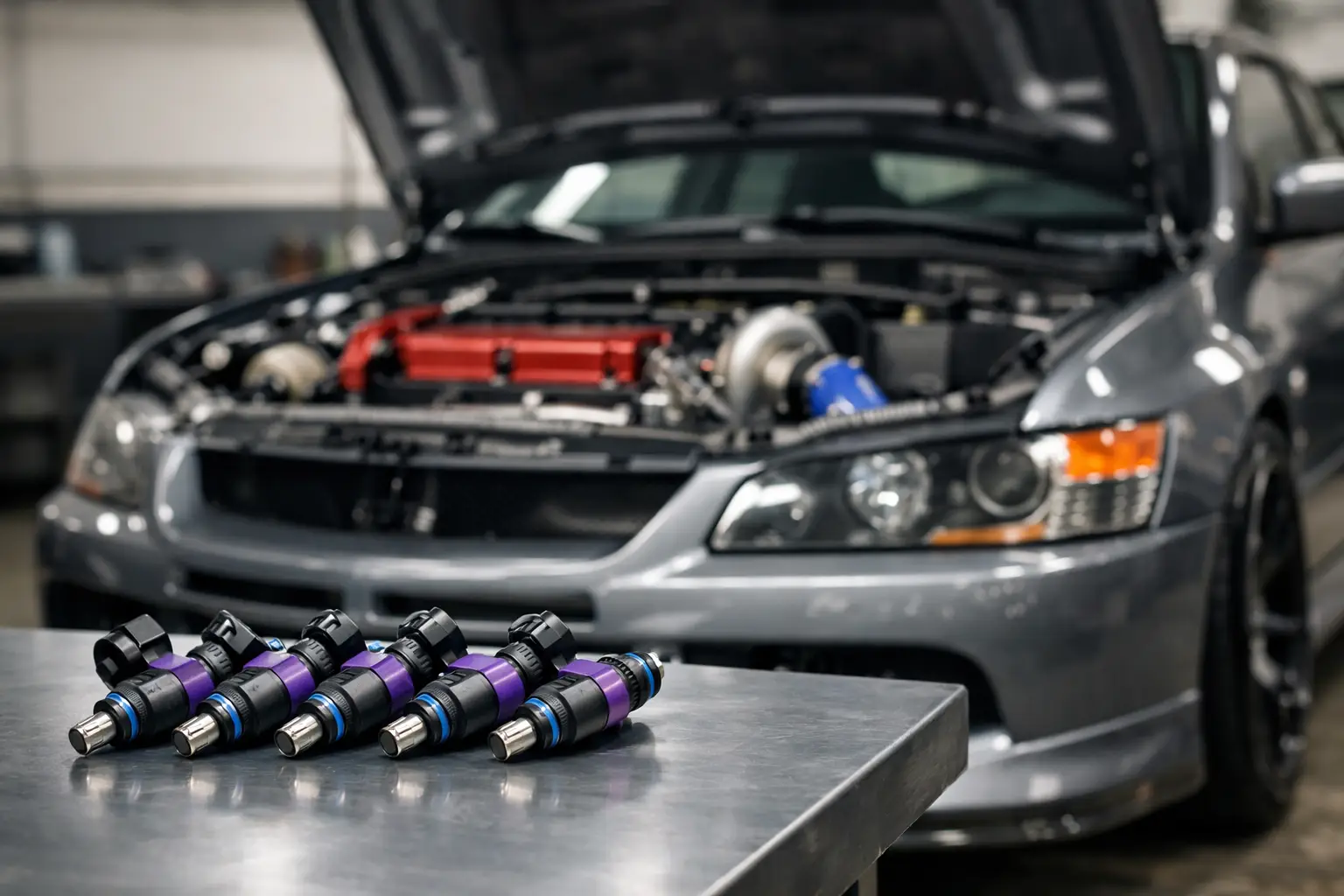
Your stock Evo 9 injectors are not the part to gamble with once boost, airflow, and ethanol start climbing. If the car is pulling hard up top, IDC is creeping into the danger zone, or your tuner keeps telling you the fuel system is the next choke point, it is time to fix it properly.
Upgrading injectors on a 4G63 is not complicated, but doing it right takes more than swapping in a bigger set and hoping the ECU sorts it out. Injector size, fuel type, deadtime data, base pressure, and tune quality all matter. If one of those is off, the car will tell you fast with rough idle, ugly trims, hard starts, or worse.
How to upgrade Evo 9 fuel injectors without creating new problems
The right way to approach an Evo 9 injector upgrade is to treat it as a system change, not just a parts change. Bigger injectors only help when the pump, regulator behavior, tune, and intended power level all line up.
On a near-stock turbo setup running pump gas, many owners jump to 1000cc injectors because they are common, tuner-friendly, and leave room to grow. That can work well, especially if the car is headed toward a bigger turbo later. But if your build is modest and you care about stock-like drivability, there is a real argument for sizing closer to your actual needs instead of going oversized just because the internet says so.
For E85 or aggressive boost on a larger turbo, injector demand rises fast. Ethanol needs more volume, and that changes the whole conversation. A setup that is comfortable on gasoline can run out of injector much earlier on E85. That is why the best injector upgrade starts with one question – what is the real goal for this car over the next year, not just this week?
Know when the stock injectors are done
An Evo 9 owner usually reaches the injector decision after seeing one of two things. The first is a tuning log showing injector duty cycle getting too high at the top of a pull. The second is a parts plan that clearly outgrows stock fuel flow, like a turbo upgrade, cams, flex fuel setup, or a move to E85.
If the car is still on stock turbo, stock MAF, and pump gas with mild bolt-ons, stock injectors may not be your immediate limit. But once the build starts stacking airflow mods and boost, injector headroom disappears. That is when reliability starts slipping away. On a street-driven Evo that sees hard pulls and track days, headroom matters just as much as peak power.
Pick injector size based on the build, not forum hype
This is where a lot of Evo 9 builds get sideways. Bigger is not automatically better.
If you want a clean-running street car with room for common bolt-ons and a conservative tune, 850cc to 1000cc injectors are often a practical range. If the car is moving toward a bigger turbo, ethanol, or serious track use, 1200cc and beyond may make more sense. The trade-off is that very large injectors can be less forgiving at idle and low load if the data is poor or the tune is lazy.
Modern high-quality injectors are much better than older big-injector options, so large sizes can still drive well. The key phrase there is high-quality. Cheap injectors with questionable flow matching are false economy on an engine that lives and dies by clean fueling.
For Evo owners, the safe move is to choose injectors with solid characterization data and a proven track record on the 4G63. That gives your tuner real information to work with instead of forcing them to guess around bad parts.
Parts you should think about before the injector swap
Injectors do not operate in a vacuum. If you are upgrading because the car needs more fuel, make sure the rest of the system is ready.
A healthy fuel pump is the obvious one. There is no point installing larger injectors if the pump cannot maintain volume under load. Base fuel pressure and regulator condition matter too. If pressure control is unstable, injector behavior becomes inconsistent and tuning gets messy.
The injector seals, lower insulators, and rail fitment deserve attention as well. Fuel leaks around the rail or manifold are not minor issues on a boosted 4G63. Replace old seals, lubricate them properly during install, and make sure the injectors seat cleanly. If your rail, manifold, or spacers are aftermarket, double-check height and alignment before bolting everything down.
Electrical connectors can also become part of the job depending on injector style. Some injectors are direct-fit, others need plug adapters. That is not a deal breaker, but it should be planned before the car is apart.
Installation basics that actually matter
Physically swapping injectors on an Evo 9 is straightforward if you work clean. Relieve fuel pressure first, remove the rail carefully, and inspect the bores before installing anything new. Damaged O-rings, dry installation, or forcing the rail into place are the easiest ways to turn a simple upgrade into a leak problem.
Use a light coat of fuel-safe lubricant on the seals, seat the injectors evenly, and tighten the rail with care. Once everything is back together, cycle the key and check for leaks before starting the car. Then check again after it runs.
That sounds basic, but basic mistakes cause a lot of headaches. On these cars, clean install work is part of race-ready reliability.
Tuning is the real upgrade
If you are searching for how to upgrade evo 9 fuel injectors, this is the part that matters most. Injectors are not plug-and-play unless the ECU knows exactly what changed.
The ECU needs correct injector scaling and latency data. On an Evo 9, that usually means updating injector size values and deadtimes in the tune, then dialing in fuel trims, startup behavior, and load fueling. If those values are wrong, the car may idle rich, stumble cold, or show ugly short-term and long-term trims even if the hardware is perfectly good.
This is also why copying another owner’s injector settings is a bad shortcut. Different fuel pressure, battery voltage behavior, fuel type, MAF calibration, and ECU strategy can change what the car wants. Good data gets you close. A real tune finishes the job.
If your Evo is on a factory ECU with reflash tuning, the setup can be excellent when the injector data is right. If the car runs standalone or a more advanced engine management package, you still need proper characterization. There is no magic box that fixes bad injector data.
What changes after the upgrade
A properly tuned injector upgrade should feel boring in the best way. The car should start clean, idle steadily, cruise normally, and pull harder only because it now has the fuel to support the setup safely.
If it suddenly smells rich, surges at light throttle, or fouls plugs, do not blame injector size first. Most of the time, the issue is tune data, fuel pressure, or installation error. Good injectors on a good tune do not have to ruin drivability.
That is especially true for Evo 9 street cars that see occasional track time. You want an injector setup that can handle full-load demand without turning daily driving into a chore. The sweet spot is enough capacity for the build with enough quality to keep low-load control tight.
Common mistakes Evo 9 owners make
The first mistake is buying injectors for a future setup that may never happen. If the car is realistically staying on pump gas with a modest turbo, buying massive injectors just because they are available can create extra tuning work without real benefit.
The second mistake is ignoring the pump and regulator. Injectors cannot fix supply problems upstream.
The third is treating injector data like a minor detail. On a modern performance build, data quality is part of the hardware quality. You are not just buying flow rate. You are buying consistency, response, and tuneability.
The last mistake is skipping support from people who actually know Evo fitment. These cars reward platform-specific parts choices. Rail spacing, connector style, ECU strategy, and known tuner preferences all matter more on an Evo than they do in a generic parts catalog. That is exactly why specialists like Evo Motor Parts exist.
Choosing an upgrade path that makes sense
For most Evo 9 owners, the best injector upgrade is the one that matches the car’s next real step. If the build is a fast street setup with room to grow, choose a quality injector in a sensible size range and pair it with a known-good fuel pump and proper tune. If the goal is ethanol and bigger power, plan the whole fuel system now instead of replacing parts twice.
The smartest builds are not the ones with the biggest numbers on paper. They are the ones that start every time, stay consistent on hot laps, and have enough fuel headroom that your tuner is not threading a needle at full boost.
Build it once, tune it right, and let the car do what an Evo 9 does best – pull hard with confidence.