Evo X Wideband O2 Sensor: Syvecs Fitment & Fault Guide
A wideband signal is only useful when the sensor, controller and calibration agree
An Evo X wideband O2 sensor can support accurate air-fuel feedback for a compatible standalone ECU. Correct sensor identity, wiring, exhaust placement and tuner validation matter more than replacing a sensor from one suspicious reading.
What an Evo X wideband O2 sensor does
An oxygen sensor samples exhaust gas so the engine-management system can infer whether combustion is richer or leaner than its target. A wideband system reports across a broader operating range than a conventional switching sensor, making it useful for tuning, logging and closed-loop fuel control when the ECU and wiring are designed for it.
The sensor is only one part of the measurement chain. Its calibration characteristics must match the controller or ECU input, the harness must supply the correct heater and signal connections, and the software must be configured for that exact combination. A new sensor connected to the wrong hardware can produce a plausible-looking but incorrect value.
Wideband sensor, controller and ECU: keep the roles clear
| Part | Job | Common mistake |
|---|---|---|
| NTK sensing element | Samples exhaust oxygen and responds to mixture changes | Assuming every NTK connector uses the same calibration |
| Harness/controller input | Powers the heater and interprets the sensor signal | Splicing by wire color without a verified pinout |
| Syvecs ECU calibration | Uses the configured value for logging or control strategies | Selecting the wrong sensor profile or trusting an unvalidated channel |
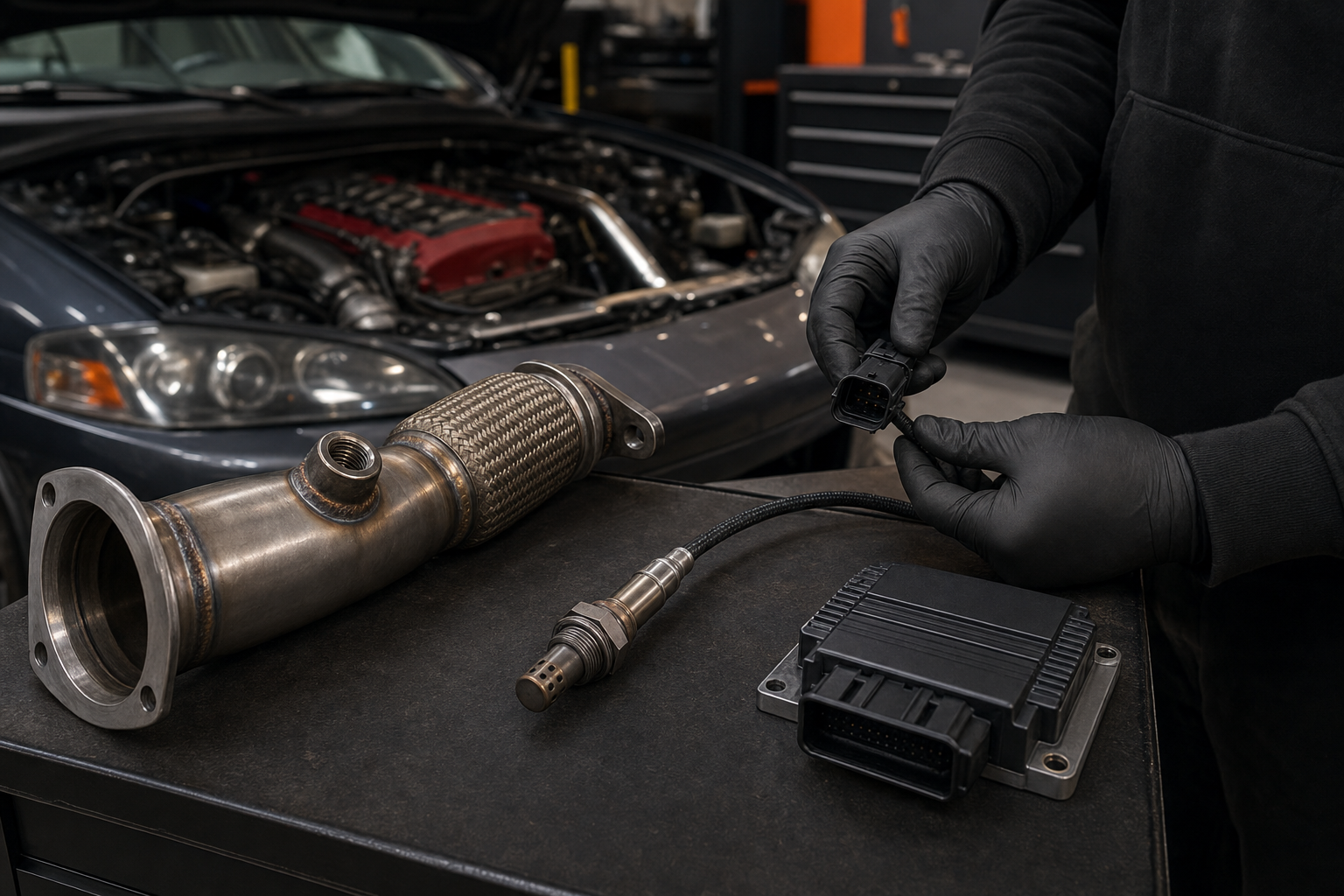
The live Evo Motor Parts listing identifies the NTK LZA09-E1 (0025) sensor for the Syvecs S7Plus Evo X ECU. The related ECU listing covers 2008–2015 Evolution X applications and asks buyers to select Manual or SST. Confirm both transmission choice and current wiring before ordering.
Symptoms that deserve investigation
- A reading that freezes, drops out or changes unrealistically fast compared with engine load.
- Repeated heater, sensor or lambda-related fault codes after the engine and exhaust are warm.
- Fuel corrections that reach an unusual limit or behave differently from previous verified logs.
- Rich or lean indications that disagree with exhaust smell, fuel consumption, spark-plug condition or a known-good reference sensor.
- An intermittent fault after bumps or heat soak, suggesting connector, wiring or strain-relief trouble.
None of these proves the sensor element is bad. An upstream exhaust leak can draw outside air into the stream and falsely suggest a lean mixture. A damaged connector, poor ground, incorrect ECU setup, contaminated sensor or failing heater circuit can create similar behavior. Diagnose the system, not only the replaceable part.
Fitment checks before buying
- The product page lists NTK LZA09-E1 (0025) for the Syvecs S7Plus Evo X ECU.
- Confirm whether your loom already includes the correct mating connector and lead.
- Verify the exhaust has a suitable bung in an approved position and angle for the sensor.
- Check clearance from the floor, driveshaft, heat shields and road debris through engine movement.
- Ask your tuner whether the current Syvecs map is configured for this exact sensor before starting the engine.
NTK O2 Sensor for Syvecs Evo X ECU
The listed sensor is identified as NTK LZA09-E1 (0025) and is intended for the Syvecs S7Plus Evo X application. Review the live listing and verify the complete system before purchase.
View the NTK sensorSyvecs S7Plus ECU Kit for Evo X
The related plug-and-play kit is listed for 2008–2015 Evo X models with Manual or SST selections. ECU installation and calibration should be handled by an experienced professional.
View the Syvecs ECU kitSafe sensor replacement planning
1. Let the exhaust cool completely
The turbine outlet, downpipe and sensor can cause severe burns long after the engine is switched off. Work only when the exhaust is fully cool. If the car must be raised, use a professional lift or correctly rated jack stands on a level surface; never work beneath a vehicle supported only by a jack.
2. Disconnect by the connector, not the cable
Release the harness lock without twisting the sensor lead. Inspect both halves for bent pins, corrosion, melted plastic or a loose terminal. Photograph the routing so the replacement lead can follow the safe path away from the exhaust, steering, driveline and sharp edges.
3. Remove the sensor without damaging the bung
Use the correct oxygen-sensor socket and steady force. A seized sensor can damage a thin or poorly welded bung. If the threads resist, stop before tearing them out. Replacement or welding work belongs with a qualified exhaust shop.
4. Follow the manufacturer’s thread guidance
Some sensors arrive with approved compound on the threads. Do not coat the sensing tip, vents or connector, and do not add generic anti-seize unless the sensor manufacturer specifically permits it. Contamination can shorten sensor life or affect response.
5. Route and secure the lead
Install the sensor to the specified torque, then secure the harness with enough slack for engine movement but no loop that can touch the exhaust or road. Never pull the cable tight or suspend its weight from the connector.
Startup and validation
Before startup, confirm the ECU configuration with the tuner and account for every tool. Watch the sensor channel during a cold start and warm-up only as directed; heater control and readiness behavior vary by system. Check for exhaust leaks, wiring heat and fault codes. Do not copy calibration values from an unrelated controller.
Compare the reading with known operating conditions and, when necessary, a professional reference instrument. The final test is a controlled log reviewed by someone who understands the Syvecs strategy. For broader ECU planning, read Choosing the Right ECU for Your Evo X.
What commonly shortens sensor life
- Silicone, sealant, coolant or excessive oil entering the exhaust stream.
- Persistent rich operation, misfire or leaded/racing fuel that is not sensor-compatible.
- A sensor mounted where condensation collects on the hot element.
- Harness contact with the exhaust or excessive tension at the connector.
- Powering a sensor without the controller and calibration it was designed to use.
Verify the complete measurement chain
A reliable Evo X wideband O2 signal comes from the correct NTK sensor, compatible Syvecs hardware, safe exhaust installation and verified software configuration. Confirm every link before tuning, and treat an uncertain reading as a reason to stop—not a reason to add fuel blindly.
Check current sensor details