Evo 8 Fuel Pressure Regulator Guide: Symptoms, Testing & Setup
Stable fuel pressure starts with correct diagnosis
An Evo 8 fuel pressure regulator helps maintain the pressure relationship the injectors need as manifold pressure changes. Testing the whole system is safer than turning the adjustment screw until a symptom disappears.
What the regulator is supposed to do
Fuel injectors deliver fuel according to the pressure difference across the injector. A manifold-referenced regulator changes rail pressure as manifold pressure moves from vacuum to boost. The exact base-pressure specification and reference condition depend on the vehicle and fuel-system configuration, so use the correct workshop or tuner specification.
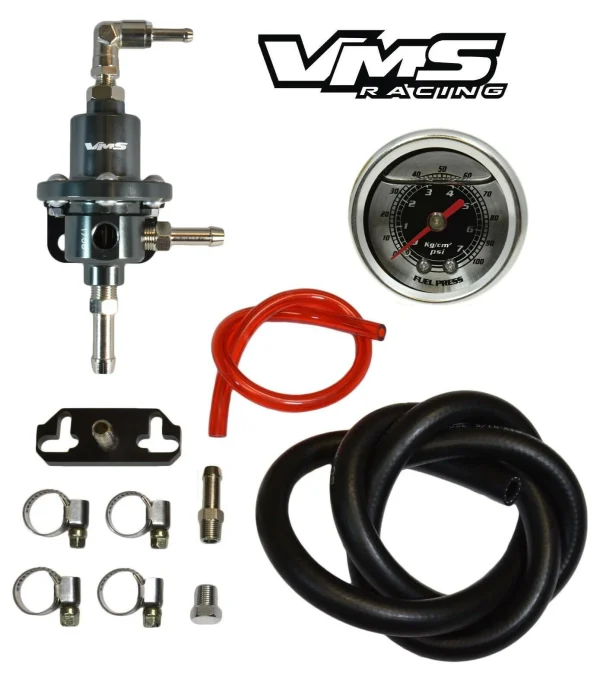
Regulator and gauge option
This fuel-pressure regulator and gauge is listed for the Mitsubishi Lancer Evo 8. Confirm fittings, fuel compatibility, pressure range, mounting and return-line requirements before ordering.
View the Evo 8 regulator gaugeSymptoms worth investigating
- Hard starting, unstable idle or hesitation.
- Fuel trims that move unusually rich or lean.
- Pressure that does not hold the specified base value.
- Pressure that fails to respond consistently to the manifold reference.
- Fuel odor, visible leaks or a wet reference hose.
- Lean behavior at load despite apparently normal idle pressure.
None of these proves the regulator is faulty. A weak pump, restricted filter, poor pump voltage, incorrect injector data, leaking injector, blocked return, damaged reference hose or calibration problem can produce overlapping symptoms.
How to test fuel pressure safely
- Use a suitable gauge. Confirm its range, condition and fuel compatibility.
- Inspect for leaks before starting. Wipe connections dry and keep ignition sources away.
- Follow the correct base-pressure procedure. Apply the specified reference-hose condition for the setup.
- Check reference response. Pressure should behave consistently as manifold pressure changes.
- Test under the conditions that produce the fault. Use safe remote logging or a professional dyno rather than watching an engine-bay gauge while driving.
Setting an adjustable regulator
Do not use the regulator to hide an undersized pump, wiring voltage loss or a bad tune. Establish the correct base pressure for the injectors and calibration, lock the adjustment, recheck for leaks and verify pressure again after heat cycling. Any pressure change can alter delivered fuel, so the tune may need review.
Gauge placement and accuracy
An engine-bay gauge is useful for setup and quick checks, but heat and vibration can affect small mechanical gauges. A quality electronic sensor connected to the ECU or logger is better for monitoring pressure under load. Compare readings if the numbers do not make sense.
Before ordering parts
- Confirm Evo 8 model and current rail/line configuration.
- Identify feed, return and manifold-reference connections.
- Check whether adapters, hose, fittings or a mounting bracket are included.
- Verify compatibility with the fuel being used.
- Plan a leak test and calibration check after installation.
Measure first, adjust once
Correct fuel pressure protects drivability and engine safety. Diagnose the supply, return, reference and electrical sides together, then set the regulator to the specification used by the tune.
Check the regulator listing