Evo X Coilover Setup Guide: Street Comfort, Alignment & Track Balance
Fast, stable and still usable on the street
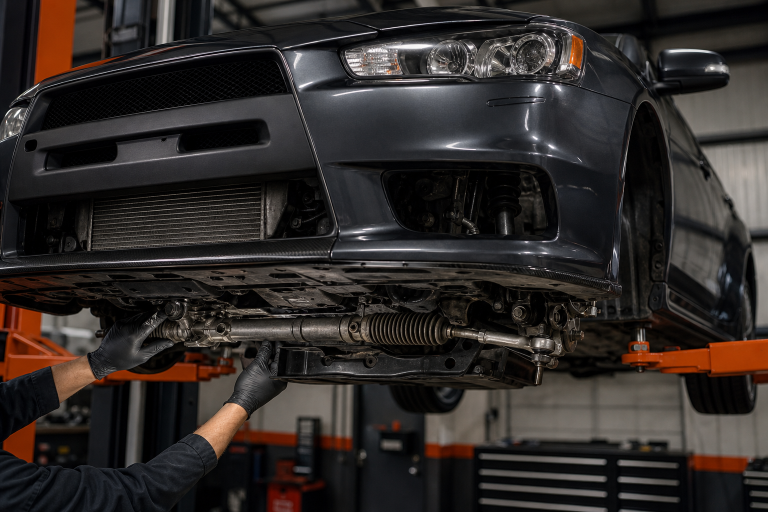
A good Evo X coilover setup is more than a lower ride height. Spring travel, damping, alignment and tire clearance must work together so the car remains predictable on real roads and at the track.
Start with the job the car must do
A daily-driven Evo X needs enough bump and droop travel for broken pavement, passengers and cargo. A track-focused car may accept firmer damping and more aggressive alignment, but it still needs suspension travel. Setting the car extremely low can place it near the bump stops, distort geometry and make grip worse on imperfect surfaces.
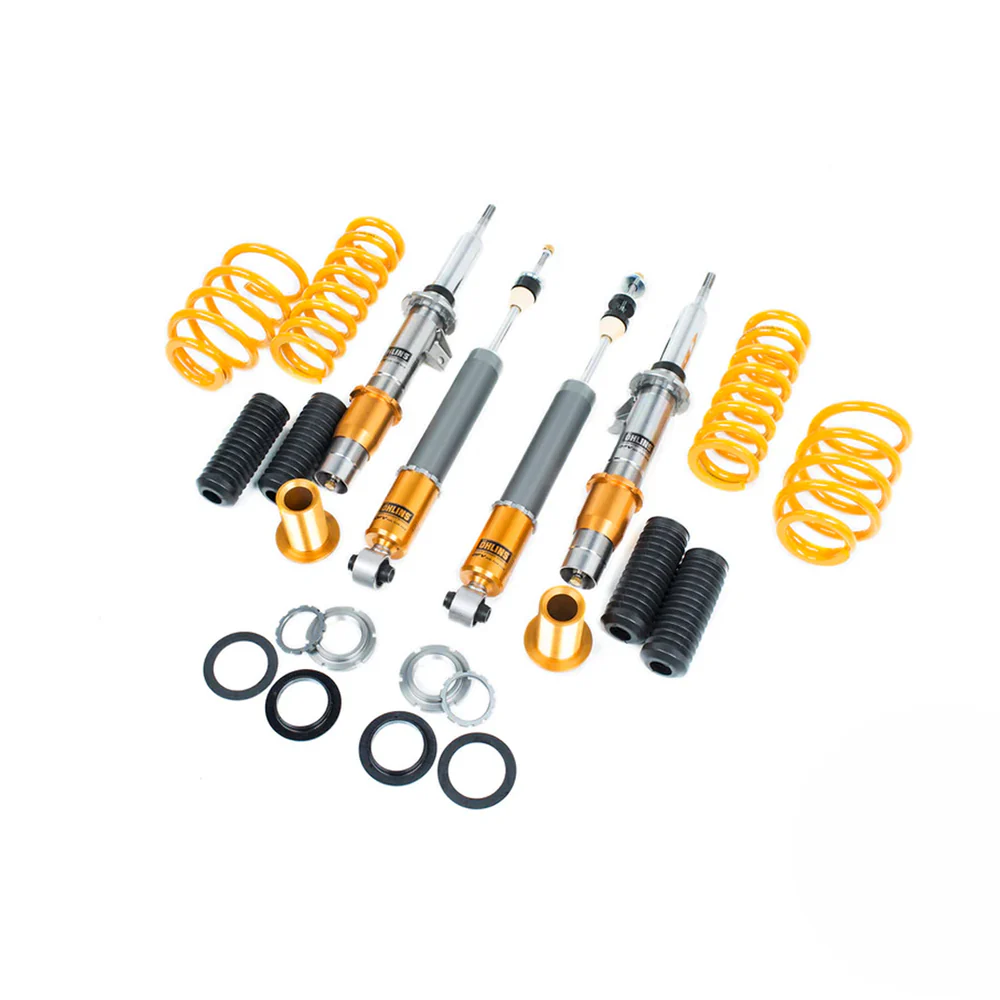
Road-and-track coilover option
The Öhlins Road & Track system is listed for the 2007–2015 Mitsubishi Evo X CZ4A. Review the current product specification and confirm the exact application before installation.
View the Öhlins coilover systemA sensible setup order
- Inspect the chassis first. Worn bushings, ball joints, tie rods or wheel bearings undermine every adjustment.
- Set a conservative ride height. Preserve travel and confirm tire, wheel, brake-line and driveshaft clearance.
- Baseline damping. Start from the manufacturer’s road recommendation rather than the firmest setting.
- Set tire pressures. Alignment and handling notes are meaningless if pressures are inconsistent.
- Align and road-test. Change one variable at a time and record the result.
Damping: firmer is not automatically faster
Damping controls suspension movement; it does not replace the spring. Too little control can allow repeated oscillation. Too much can prevent the wheel from following a rough surface, reducing grip and comfort. Begin at the recommended baseline, make small equal changes and evaluate the same route or track conditions.
Alignment for tire life and confidence
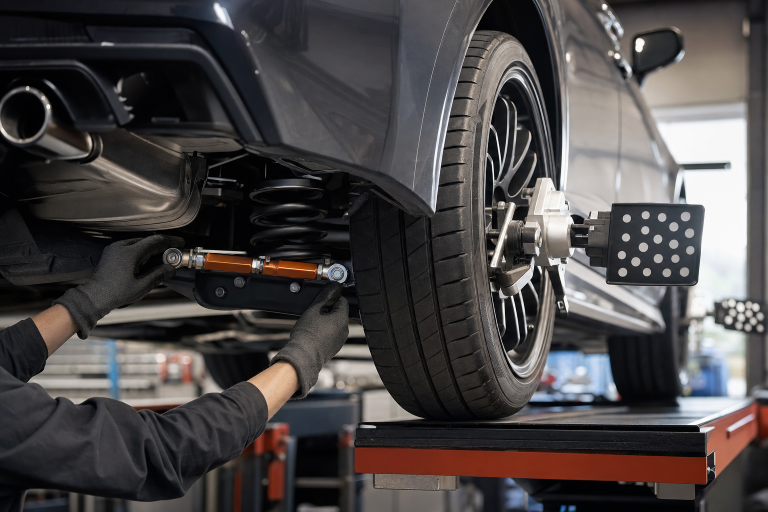
Ride-height changes alter toe and camber. The car needs an alignment after installation and again after components settle. Street setups usually prioritize stable toe and reasonable camber for braking, wet grip and tire life. Track setups may use more negative camber, but the correct number depends on tire construction, ride height, body roll and measured temperatures.
When added adjustment is required
Lowered cars can run out of useful factory adjustment. Adjustable SPL rear toe arms and rear lower camber links can help an alignment specialist reach a deliberate target. They should be installed and secured correctly, then rechecked.
Corner balancing and final checks
Corner balancing is most useful when the car has adjustable per-corner spring platforms and a consistent competition load. Set ride height and alignment first, place the usual driver and fuel load in the car, and avoid chasing a perfect number at the expense of usable ride height.
- Torque all fasteners at the specified suspension position.
- Confirm brake-hose, ABS-wire and tire clearance at full steering lock and compression.
- Recheck collars and fasteners after the initial settling period.
- Inspect tire wear frequently and keep a log of damping changes.
Build a repeatable baseline
The best Evo X coilover setup is one you can measure, understand and refine. Preserve travel, align the car correctly and change only one setting at a time.
Explore the Evo X coilover system