Evo X Driveshaft Carrier Bearing Bushings: Vibration & Install Guide
Trace Evo X driveline vibration before changing bushings
Carrier-bearing support bushings can tighten driveshaft support, but vibration may also come from tires, wheel bearings, CV joints, mounts, exhaust contact or the shaft itself. Diagnose the pattern first, then plan a safe installation.
Speed or engine load?
Note whether the vibration follows road speed, rpm, throttle or gear position.
Inspect before upgrading
Check the rubber supports, bearing, shaft joints, fasteners and nearby exhaust.
Support the shaft
Never unbolt a carrier support without controlling driveshaft weight and position.
What the carrier bearing supports do
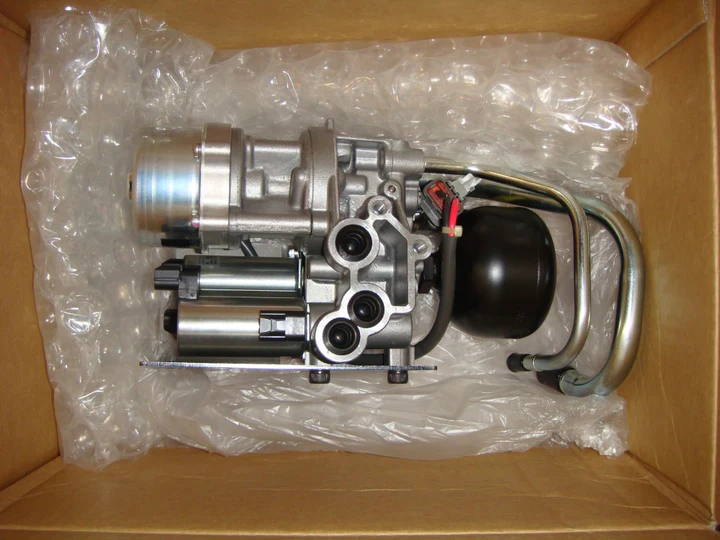
The Evo X uses a multi-piece driveshaft to transfer torque toward the rear differential. A center carrier bearing and its supports help hold the shaft at the designed height and alignment while allowing the factory system to isolate some noise and movement. Age, heat, contamination and repeated torque reversals can soften or tear the original rubber support material.
When the supports allow excess movement, the shaft can feel less controlled during throttle changes. A firmer bushing set replaces compliant rubber at the mounting points with a more rigid connection. That may sharpen driveline response and keep the carrier location consistent, but it can also transmit more noise, vibration and harshness into the cabin. It is an upgrade with a tradeoff, not a universal cure.
Symptoms that justify an inspection
- A vibration felt through the floor or seat that changes with road speed.
- A thump or clunk when taking up drive, lifting off the throttle or changing direction.
- Visible cracking, collapse or separation around a carrier support.
- Movement at the support that looks excessive compared with an intact mount.
- Evidence that the driveshaft or exhaust has contacted a nearby component.
- A new vibration after driveshaft, differential, clutch or exhaust work.
None of these symptoms identifies the bushings by itself. A wheel or tire problem often follows road speed. An engine or transmission mount problem may follow rpm or load. A failing CV joint can change through turns or acceleration. A damaged carrier bearing can growl or feel rough even when the external supports look acceptable.
A disciplined vibration diagnosis
1. Record the operating pattern
On a safe road, note the exact speed, gear, throttle position and temperature when the vibration begins. Determine whether coasting changes it. Do not perform high-speed testing if the vibration is severe, the shaft appears damaged or any fastener may be loose.
2. Eliminate wheel and tire causes
Inspect tire condition, pressure, wheel damage and missing balance weights. A bent wheel or separated tire can mimic a driveshaft problem. Confirm wheel-nut torque using the correct specification before moving deeper into the drivetrain.
3. Inspect mounts and surrounding clearance
Check engine and transmission mounts, the exhaust, heat shields and undertrays for fresh witness marks. An exhaust pipe touching the body under load can create a vibration that feels like a rotating-component fault.
4. Examine the shaft and carrier area
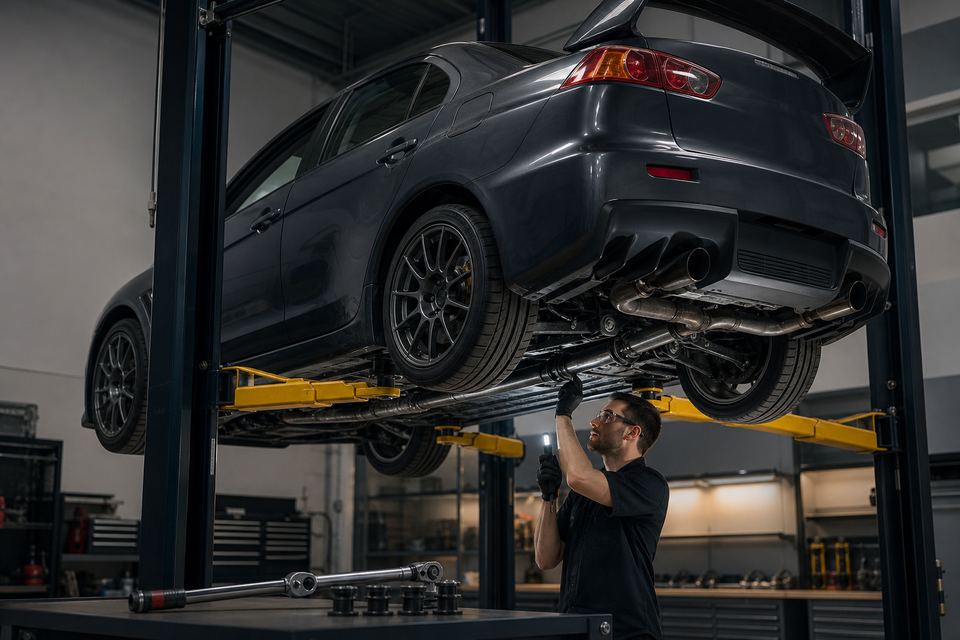
With the vehicle safely raised and the drivetrain unloaded, look for missing balance weights, dents, corrosion, damaged boots, loose hardware, torn rubber and abnormal carrier position. Rotate only as permitted by the service procedure, keeping hands clear of pinch points.
5. Check bearing and joint condition
Bushing replacement will not repair a rough carrier bearing, worn universal joint, damaged CV joint or bent shaft. If rotation feels rough, play is excessive or alignment is uncertain, stop and have the complete shaft assessed by a qualified driveline technician.
Understanding the STM support-bushing options
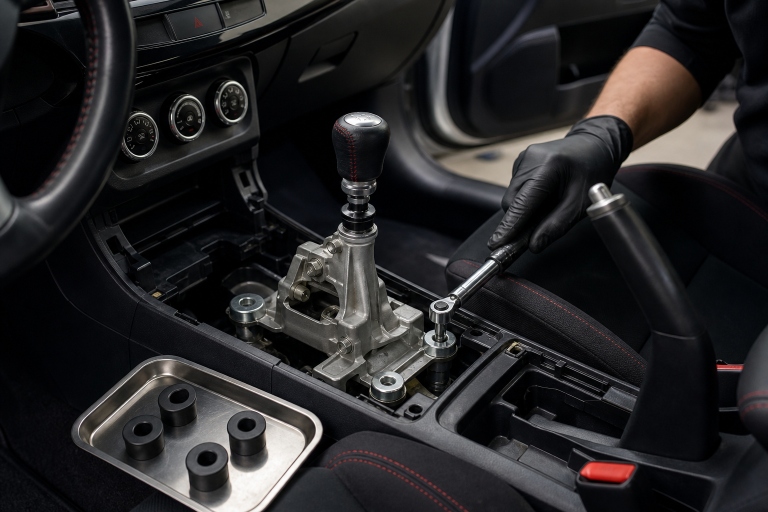
Evo Motor Parts lists the STM Driveshaft Carrier Bearing Support Bushings for DSM, 3S and Evo I–X as a live, in-stock product. The product description identifies black-anodized aluminum construction and direct replacement for the relevant factory rubber supports.
The listing states that the same bushing design fits Evolution I–X and several other Mitsubishi AWD applications. It offers a full set of four bushings, supplied as eight pieces, or a single two-piece bushing for some aftermarket-driveshaft arrangements. Do not select the quantity from the vehicle name alone. Inspect the shaft fitted to the car and confirm how many carrier locations and support pieces it actually uses.
The listing references OEM support part numbers MB505658 and MB837586. Those references help identify the type of support replaced, but exact compatibility still depends on the installed shaft and previous modifications. Contact Evo Motor Parts before ordering if the car has a non-standard, one-piece or aftermarket driveshaft.
Installation planning
Before disassembly, photograph the carrier brackets, spacer order, fastener direction and shaft orientation. Mark the relationship of any shaft sections or flanges only where the service procedure permits. Changing phasing or reassembling a balanced shaft in a different orientation can introduce vibration.
- Confirm the correct workshop procedure and torque specifications for the exact model year.
- Support the driveshaft at more than one point so it cannot hang from a joint.
- Use eye protection; underbody debris can fall when brackets are disturbed.
- Keep replacement pieces organized by carrier location.
- Inspect bolts, threads and brackets; replace damaged hardware with the correct specification.
- Do not force misaligned brackets together with fastener torque.
Rigid aluminum bushings should seat squarely against clean, undamaged mounting surfaces. Follow the product and vehicle instructions for washer and bushing orientation. If the supplied arrangement does not match what came off the car, stop and verify rather than improvising.
Alignment and torque matter
Carrier height and bracket position influence shaft angles. Tightening a support while the shaft is pulled sideways or upward can preload the bearing and create a new vibration. Bring all relevant hardware into position by hand, confirm the shaft is naturally centered, then tighten in the specified sequence with a calibrated torque wrench.
Factory torque figures and procedures can vary by fastener and model configuration. Use current Mitsubishi service information or qualified professional guidance; do not substitute a generic internet number. Mark torqued fasteners if that is part of the workshop process, then complete a visual tool-and-hardware count before lowering the car.
What to expect after installation
A firmer support may reduce unwanted carrier movement and make throttle transitions feel more direct. Because aluminum isolates less than rubber, some increase in audible gear or shaft noise can be normal. A strong new vibration, clunk, scraping sound or heat is not normal and requires immediate reinspection.
Begin with a low-speed check in a safe area. Listen during gentle acceleration, steady cruise and lift-off. Recheck for contact and fastener security after the initial heat cycle according to the installer or product guidance. Do not use a high-speed test to “see if it settles.”
When bushings are not the answer
Choose further diagnosis when the carrier bearing itself is rough, the shaft is dented, a joint has measurable play, the flanges are damaged or the vehicle recently suffered an impact. Likewise, solve wheel, tire, differential and mount problems at their source. Firmer supports can make an existing rotating fault easier to feel; they cannot balance a damaged shaft.
If the goal is a quiet daily driver and the factory rubber is still healthy, the added harshness of a rigid bushing may not match the owner’s priorities. For a modified car with verified support movement, the tradeoff may be acceptable. Fit the solution to the diagnosis and use case.
Confirm the shaft before choosing the set
Inspect the number of carrier locations, the installed driveshaft design and the condition of the bearing and joints. Then select the matching STM support-bushing quantity and plan a supported, correctly torqued installation.
View STM carrier support bushings