Evo 7/8/9 Coolant Overflow Tank: Symptoms & Replacement
The overflow tank is simple—but its level tells a bigger story
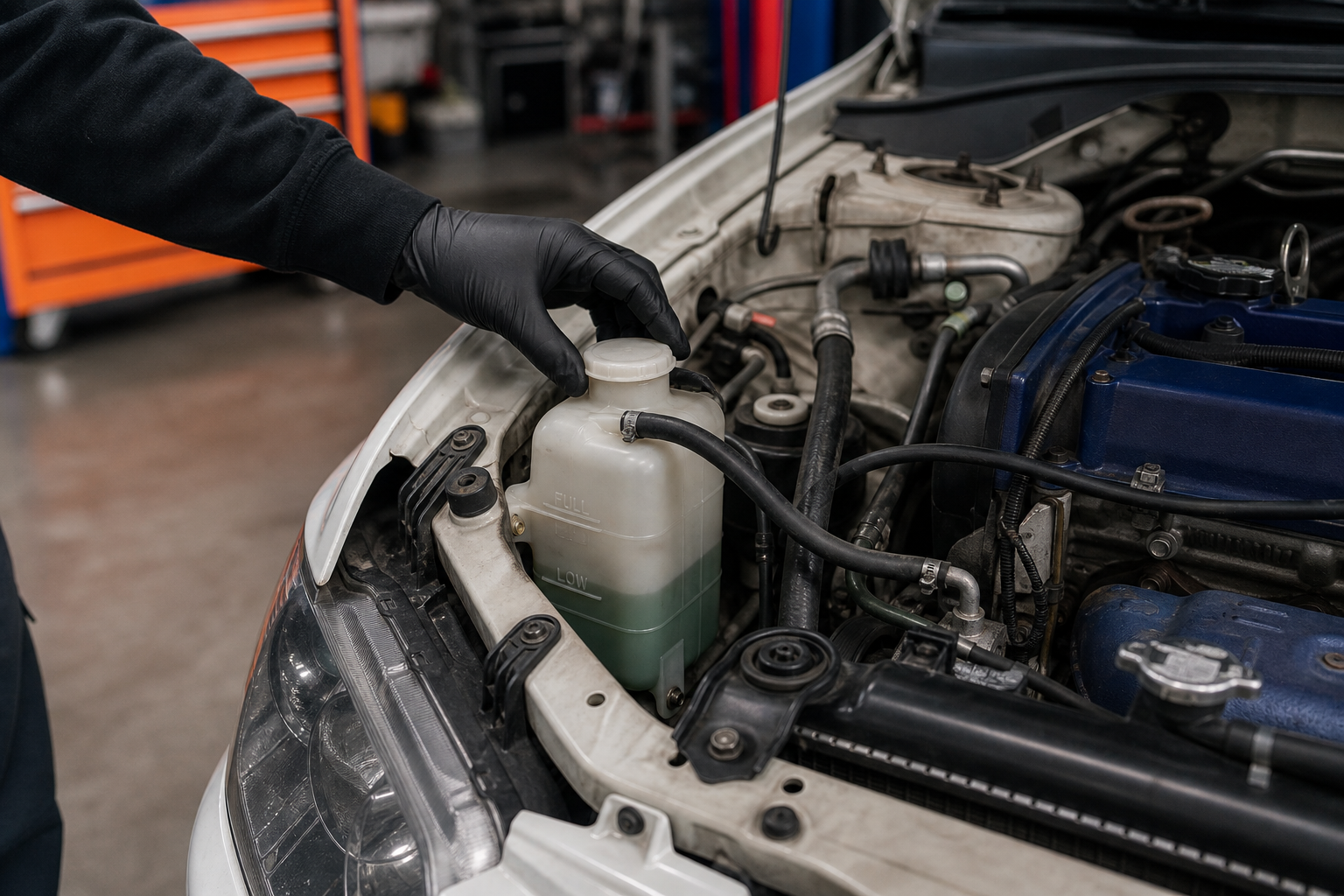
An Evo coolant overflow tank stores expanding coolant and returns it as the engine cools. Cracks, a loose hose or an incorrect cap can interrupt that cycle, but repeated level changes may also point to a wider cooling-system fault.
Common Evo 7/8/9 overflow-tank symptoms
- Coolant staining or dampness around the reservoir seam, cap or hose nipple.
- A brittle, yellowed or cracked tank that no longer shows the level clearly.
- The cold level keeps falling even though no large puddle appears.
- The reservoir fills excessively after a drive but does not draw coolant back.
- A loose, collapsed, hardened or split overflow hose.
Some level movement is normal because coolant expands with temperature. The useful clue is a repeatable abnormal pattern, especially when paired with overheating, bubbles, a sweet smell or coolant loss.
Inspect the full return path
With the engine fully cold and parked level, compare the reservoir level with the markings and the applicable service information. Inspect the tank for hairline cracks and check that its cap vents as intended. Follow the small overflow hose from the radiator neck to the tank; it must be connected, open and sealed well enough to move coolant in both directions.
A damaged radiator cap can prevent the return cycle even when the reservoir is sound. Check its seal, rating and fitment, but do not substitute a different pressure rating without verified vehicle-specific guidance.
When a reservoir replacement makes sense
Replace the tank when it is cracked, leaking, badly discolored, distorted or has a damaged hose connection that cannot retain the hose correctly. A fresh reservoir improves visibility and restores a reliable connection, but it will not cure a failing radiator cap, trapped air, a leak elsewhere or combustion gases entering the cooling system.
Choose the correct Evo 7–9 reservoir
The Evo 7–9 radiator overflow reservoir is a direct product match for this repair path. Before ordering, confirm the exact chassis, model year, mounting points, hose-port position, cap arrangement and included hardware. Compare the new and old tanks before installation.
Check the Evo 7–9 overflow reservoirSafe replacement planning
Work only on a fully cold engine. Record the old hose routing and reservoir position, then remove components only as required for access. Use a suitable container for any coolant and follow local disposal rules; coolant is toxic and attractive to animals.
Inspect the hose and clamps while the tank is out. A hardened hose can crack after being disturbed, and an overly tight clamp can damage a plastic nipple. Mount the new reservoir without stressing the plastic or letting the hose kink against nearby parts.
Refill and bleeding considerations
Use coolant that meets the requirements for the vehicle and the coolant already in service. Mixing incompatible chemistries can cause deposits or reduced protection. Follow the Mitsubishi filling and bleeding procedure for the specific car; trapped air can create unstable temperatures and misleading reservoir levels.
Verification checklist
- Set the cold level to the correct mark—do not fill to the top unless specified.
- Confirm the hose remains secure and clear of belts, fans and sharp edges.
- Warm the engine while monitoring temperature and checking for leaks.
- Let the car cool completely, then recheck the reservoir and radiator as instructed.
- Investigate any repeated overfill, emptying, bubbling or overheating.
For broader planning, see our Evo 9 cooling upgrades guide. Upgrade decisions should follow diagnosis; a larger part does not compensate for air, leaks or incorrect pressure control.
Read the level, not just the tank
A sound reservoir, correct cap and clear return hose form one system. Replace damaged plastic, then verify the coolant’s full hot-to-cold cycle before calling the repair complete.