Evo X Water Pump Symptoms: Diagnosis & Replacement Planning
Diagnose water-pump symptoms before heat becomes engine damage
A suspected Evo X water-pump problem needs a cold, methodical inspection. Learn which symptoms matter, what can mimic a pump failure and how to choose the correct OEM fastener kit for the car's model-year range.
Common Evo X water pump symptoms
- Coolant loss: the reservoir needs repeated topping up with no obvious hose leak.
- Residue near the pump: dried coolant may leave colored or chalky deposits around a leak path.
- Drips after parking: fresh coolant may collect under the engine, although airflow can move it away from the true source.
- Temperature instability: rising temperature under load or at idle needs immediate attention.
- Mechanical noise: a worn bearing may rumble or grind, but belt-driven accessories and idlers must be ruled out.
These signs do not prove the pump has failed. A radiator cap, thermostat, hose connection, radiator seam, expansion tank or trapped air can create overlapping symptoms. Diagnosis matters because overheating can damage the cylinder head, gasket and turbocharged engine long before a small leak becomes visually dramatic.
A safe diagnostic sequence
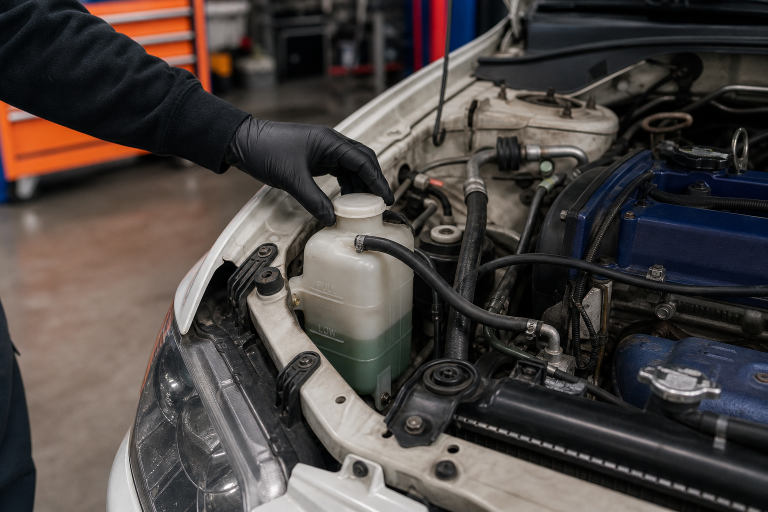
Begin only when the engine is fully cold on level ground. Check the coolant level against the marks, inspect the cap and reservoir, and look for dried residue around hose joints and cooling-system components. A bright light and clean inspection mirror are useful; avoid hands, clothing and tools near belts or rotating parts.
A cooling-system pressure test can reveal a slow external leak, but it should be performed with the correct equipment and specified pressure. Excess pressure can damage components. If no external source appears, a technician may need to test for combustion gases or evaluate thermostat operation and cooling-fan control.
Before planning water-pump replacement
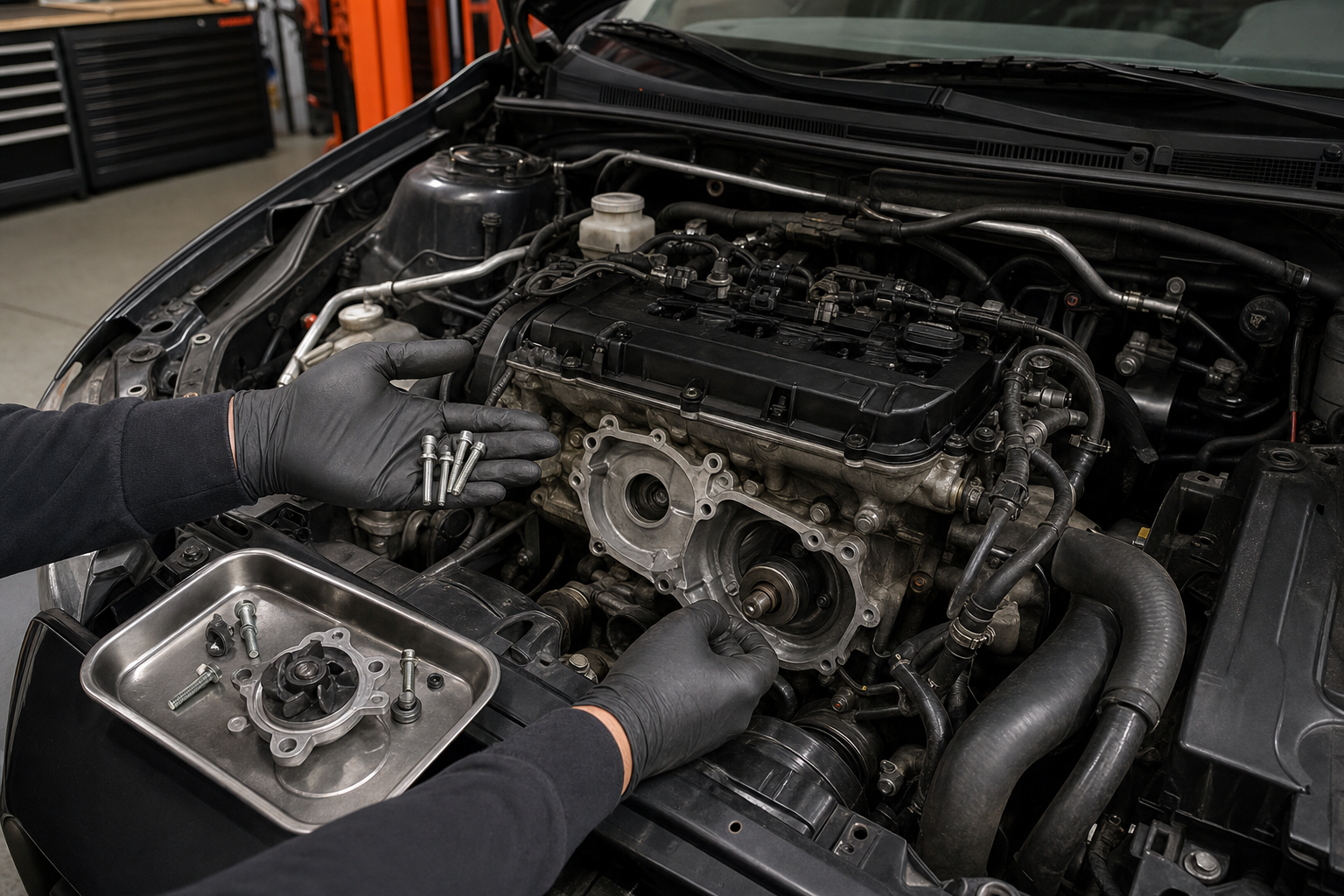
Confirm that the pump is the source, then consult current Mitsubishi service information for the exact procedure, sealant requirements, tightening sequence and torque values. This guide intentionally does not guess at torque specifications. Replacement work involves draining coolant, managing belt-driven components and preventing contamination of sealing surfaces.
Use the correct coolant specification and dispose of used coolant responsibly; it is toxic to people and animals. Refill and bleed the system according to verified service information. After the repair, check for leaks through a complete warm-up and cool-down cycle while monitoring temperature.
Choose the correct OEM bolt kit
Evo X water-pump fastener kits are divided by model-year range. Verify the vehicle's year, VIN or build date and compare the live listing with the parts removed from the car. Previous engine work may have changed hardware, so the registration year alone should not be the only check.
2008–2011 Evo X
Review this Mitsubishi OEM water-pump bolt kit for early Evo X applications. Confirm current contents and fitment before ordering.
View the 2008–2011 bolt kit2012–2015 Evo X
Use the later-model listing when the vehicle falls within the 2012–2015 range, subject to VIN and build-date verification.
View the 2012–2015 bolt kitWhat to inspect while access is open
With the pump area accessible, inspect related hoses, belt condition, pulleys and nearby coolant staining. Replace only components that fail inspection or are required by the service procedure. A broad parts swap can add cost without fixing an incorrectly diagnosed thermostat, cap or airflow problem.
If the car has a history of high coolant temperatures, the Evo X radiator upgrade guide explains how radiator condition, ducting, fans and system bleeding work together. A larger radiator cannot compensate for a leaking pump or combustion-gas intrusion.
Post-repair checklist
- Correct year-range hardware and required sealing parts were used.
- All torque values and sequences came from verified service information.
- The cooling system was filled and bled with the correct coolant.
- No leaks or abnormal noises appear through warm-up and cool-down.
- Temperature remains stable during a cautious road test.
Plan the repair with verified parts
Start with a cold-engine diagnosis, confirm the exact leak source and match the OEM bolt kit to the Evo X model-year range. When fitment is uncertain, use the product listing to contact the parts team before ordering.
Browse Evo X cooling-system parts